Work in progress
Journal of Electroanalytical Chemistry
Elucidating the Oxidation Mechanism of Scopolamine Derivatives via Electrochemistry and NMR
Cristian Vera, Jaime Pizarro, Romina Lorca, Cristian Tirapegui, Roxana Arce, Galo Ramírez, Felipe Matamala-Troncoso*, María Jesús Aguirre*
Under Review
Angewandte Chemie
Performance Evaluation of CuNiCoFeNb and CuNiCoFeMo High-Entropy Alloys in Electrocatalytic Ammonia Synthesis via Nitrate and N2
Diego Felipe Véliz-Silva, Edgar Pio, Jessica Honores, Felipe Matamala-Troncoso, Mamié Sancy, Mauricio Isaacs*
In preparation
Journal of Materials Chemistry A
Synergistic MoS2/FeS2-Ionic Liquid Hybrid Surface for Electrochemical Nitrogen Reduction
Pablo A. Barraza, Jessica S. Honores, Elías G. Leiva, Pedro P. Jofré-Ulloa, Diego F. Veliz-Silva, Natalia Sáez-Pizarro, Felipe Matamala-Troncoso, Amruthalakshmi Vijayakumar, Douglas R. MacFarlane, Mauricio Isaacs*
In preparation
Small
Size-Controlled Copper Nanocubes with Enhanced (100) Facets for Selective Electrochemical Nitrate-to-Ammonia
Macarena Nadal, Pedro P. Jofré-Ulloa, Natalia Sáez, Elías Leiva, Felipe Matamala-Troncoso, Jessica Honores, Zachary Schultz, Mauricio Isaacs*
In preparation
Sensors and Actuators B: Chemical
FeCoNiCrMn High-Entropy Alloy-Modified Carbon Black Paste Electrode as a Sensitive Platform for Hydrazine Monitoring
Bryan Pichún, Fabiana Liendo, Felipe Matamala-Troncoso, Rodrigo Segura*, María Aguirre*
In preparation
ChemCatChem
Opportunities and challenges of the electrosynthesis of nitrites and nitrates from ammonia
Thi Mung Vu, Felipe Matamala-Troncoso, Douglas R. MacFarlane*,
In preparation
Photoelectrochemical Oxidation of Ammonia by Using Titania Nanorods Modified with Black Titania
Felipe Matamala-Troncoso, Thi Mung Vu, Mattia Belotti, José Rebolledo-Oyarce, Griselda García, Douglas R. MacFarlane*, Alexandr N. Simonov*
In preparation
Published
2025 – Joule
Is oxidation of dinitrogen at measurable rates possible under mild conditions?
Mattia Belotti, Felipe Matamala-Troncoso, Alasdair I. McKay, Thi Mung Vu, Douglas R. MacFarlane*, Alexandr N. Simonov*
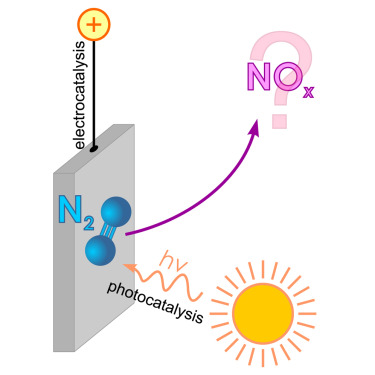
The current large-scale industrial method to produce nitrates involves two catalytic processes. First, the Haber-Bosch process transforms dinitrogen (N2) and dihydrogen (H2), the latter derived from fossil fuels, to ammonia (NH3). Second, NH3 is oxidized into nitric acid via the Ostwald process. Notwithstanding almost a century of innovation and optimization, both of these technologies operate at high temperatures (especially the Ostwald process) and high pressures (especially the Haber-Bosch process), while also producing significant amounts of greenhouse gasses—CO2 and NOx. To avoid this technologically complex two-step pathway and transform the multi-megaton nitrate production, ∼80% of which is used for fertilizers, into a sustainable process, recent research has focused on the development of electrochemical and photochemical methods for direct N2 oxidation under mild conditions. However, the apparent but misleading success in this area reported in the increasing number of publications raises a range of concerns, which are discussed and analyzed in the present article.
2024 – Electrochimica Acta
First approach of fractals nickel-copper dendrites on stainless steel electrodes for ammonia oxidation to nitrogen monitored in operando by differential electrochemical mass spectroscopy
Felipe Matamala-Troncoso, Sergio Díaz-Coello, Francisco Martínez, Herna Barrientos, Judit Lisoni, Francisco Armijo, David Lozano, Jaime Pizarro, María del Carmen Arévalo, Elena Pastor, María Jesús Aguirre*
10.1016/j.electacta.2024.144894
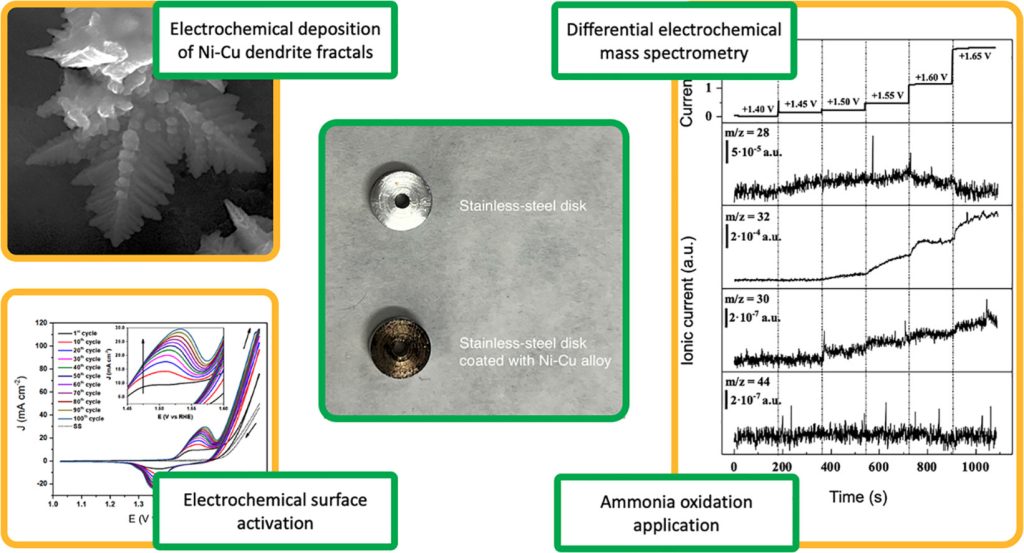
Fractal nickel-copper dendrites were synthesized by electrochemical deposition (ECD) on a stainless steel electrode (SS/NiCu). The electrode surface was characterized using Field Emission Scanning Electron Microscopy (FE-SEM), X-ray diffractometry (XRD), and Raman spectroscopy. The Ni-Cu molar ratio and the time applied in the ECD method were studied, revealing that both are critical factors in modifying and controlling the surface morphology. The SS/NiCu electrodes show a higher density current response when exposed to ammonium hydroxide, reaching a limiting current density at concentrations above 0.050 M NH4OH. Ammonia oxidation reaction (AOR) was monitored in operando using differential electrochemical mass spectroscopy (DEMS). When a bias potential over +1.50 V (vs. RHE) was applied, the evolution of oxygen and NO was observed. However, N2 was the only oxidation product at a constant potential below +1.50 V (vs. RHE). Oxygen (O2) evolution was the main competitive reaction during the AOR. The results show that products are strongly dependent on the electrochemical perturbation applied. The study demonstrated that the SS/NiCu electrodes are suitable for AOR to N2 in high alkaline conditions.
2023 – Microchemical Journal
A simple electroanalytical methodology for determination of zaleplon by adsorptive stripping voltammetry in oral fluids
Scarlett Aguilera, Erick Flores, Rodrigo Segura, Herna Barrientos, Paulina Márquez, Camilo García, Felipe Matamala-Troncoso, Jaime Pizarro*, María Aguirre*
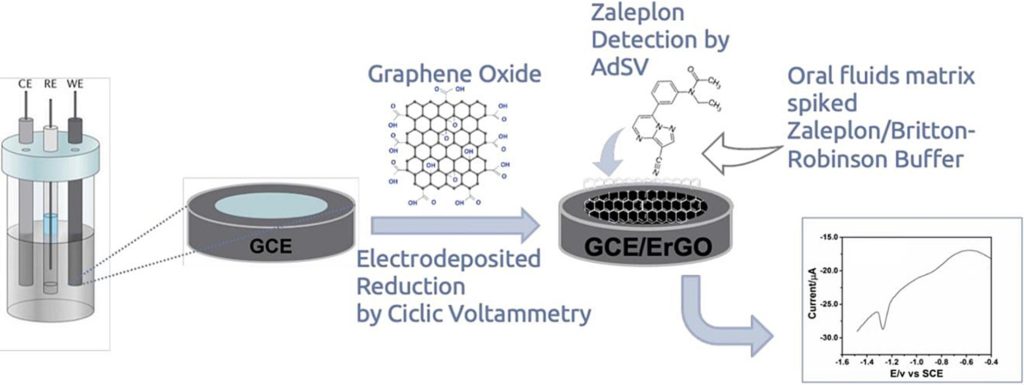
A glassy carbon electrode (GCE), modified with reduced graphene oxide (ErGO) (ErGO/GCE) was prepared for the determination of zaleplon, a common hypnotic pharmaceutical in synthetics and oral fluids. The modified electrode was evaluated using cyclic voltammetry, Raman spectroscopy, and scanning electrochemical microscopy (SECM). The electroanalytical studies were developed by square wave adsorptive stripping voltammetry (SW-AdSV) and parameters such as pH, accumulation potential, deposition time, and current response were optimized to determine zaleplon in Britton Robinson buffer. The validation was made using saliva-certified reference materials (Fusayama/Meyer Artificial Saliva and Artificial Saliva for Pharmaceutical Research showing good accuracy and reproducibility. The ErGO/GCE system showed a linear response between 10 and 130 µg/L at pH 10.0. The limit of detection was 5.30 μg L−1. The methodology was applied in the determination of zaleplon in saliva samples, obtaining excellent results (RSD < 10%), allowing the sensitive detection of zaleplon.
2023 – Surfaces and Interfaces
Experimental and theoretical study of synthesis and properties of Cu2O/TiO2 heterojunction for photoelectrochemical purposes
Felipe Matamala-Troncoso*, César Sáez-Navarrete*, José Mejía-López, Griselda García, José Rebolledo-Oyarce, Cuong Ky Nguyen, Douglas R. MacFarlane, Mauricio Isaacs
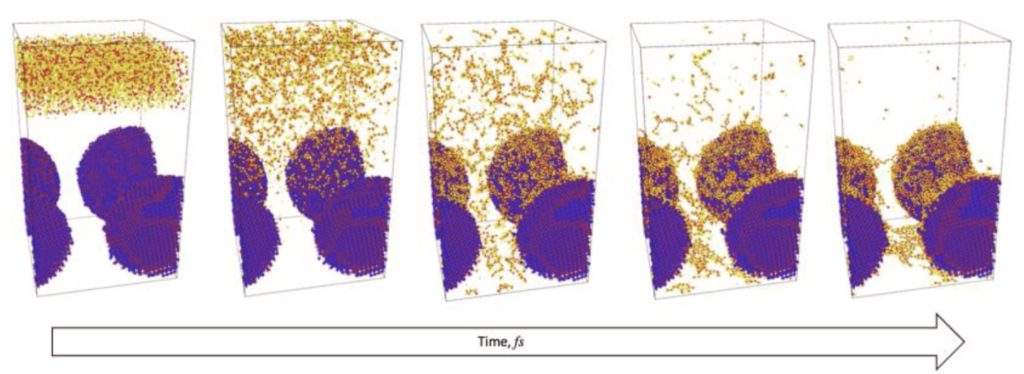
The Cu2O/TiO2 heterojunction is an attractive surface for its optoelectronic properties for developing catalysts, cells, and solar devices. However, the mechanisms involved in synthesizing an electrode using the Cu2O/TiO2 heterojunction can affect the surface properties and the surface/electrolyte interactions. In this work, we studied the formation mechanism of the Cu2O/TiO2 heterojunction by electrochemical deposition(ECD) of Cu2O molecules on TiO2 nanoparticles previously deposited on a fluorine-doped thin oxide coated glass substrate (FTO). The photoelectrochemical properties of the Cu2O/TiO2/FTO electrode were characterized by XRD, FE-SEM, TEM, EDX, UV–vis diffuse reflectance spectroscopy (DRS), Raman spectroscopy, and electrochemical methods. Theoretical methods such as ab-initio density functional theory calculations and molecular dynamics simulations were used to understand the experimental results. The analysis carried out by theoretical methods allowed us to identify the initial steps of the formation mechanism of Cu2O molecules on TiO2 nanoparticles. Theoretical calculations demonstrated that forming a Cu2O nanowire-like network on the TiO2 nanoparticle matrix favors the charge transfer at the electrolyte/semiconductor interface, promoting the behavior of the electrode as a cathode. Finally, the Cu2O/TiO2/FTO electrode synthesized was used to perform the reduction photoelectrocatalyzed of nitrate to ammonia under illumination with a Xe-Hg arc lamp and applying −0.5 V bias potential (vs Ag/AgCl sat.) to evaluate the performance of the electrode as a cathode.
2022 – Photochem
Photocatalyzed Production of Urea as a Hydrogen–Storage Material by TiO2–Based Materials
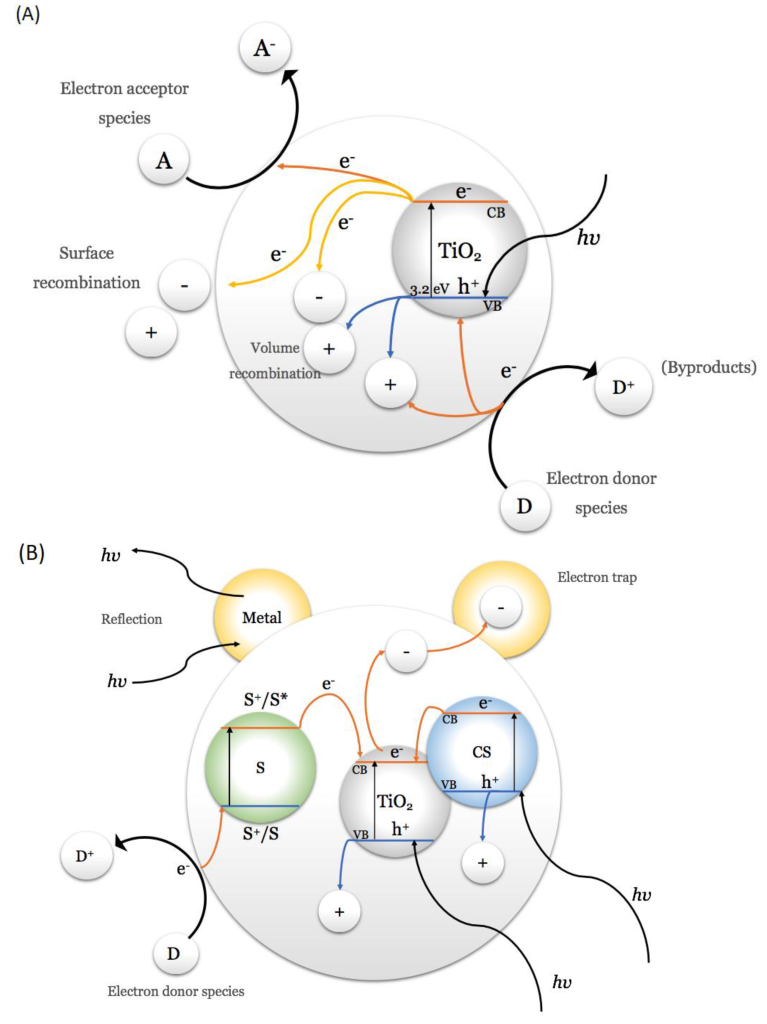
This review analyzes the photocatalyzed urea syntheses by TiO2–based materials. The most outstanding works in synthesizing urea from the simultaneous photocatalyzed reduction of carbon dioxide and nitrogen compounds are reviewed and discussed. Urea has been widely used in the agricultural industry as a fertilizer. It represents more than 50% of the nitrogen fertilizer market, and its global demand has increased more than 100 times in the last decades. In energy terms, urea has been considered a hydrogen–storage (6.71 wt.%) and ammonia–storage (56.7 wt.%) compound, giving it fuel potential. Urea properties meet the requirements of the US Department of Energy for hydrogen–storage substances, meanly because urea crystalizes, allowing storage and safe transportation. Conventional industrial urea synthesis is energy–intensive (3.2–5.5 GJ ton−1) since it requires high pressures and temperatures, so developing a photocatalyzed synthesis at ambient temperature and pressure is an attractive alternative to conventional synthesis. Due to the lack of reports for directly catalyzed urea synthesis, this review is based on the most prominent works. We provide details of developed experimental set–ups, amounts of products reported, the advantages and difficulties of the synthesis, and the scope of the technological and energetic challenges faced by TiO2–based photocatalyst materials used for urea synthesis. The possibility of scaling photocatalysis technology was evaluated as well. We hope this review invites exploring and developing a technology based on clean and renewable energies for industrial urea production.
2021 – Materials Letters
Facile methodology to generate Cu2O/TiO2 heterojunction on FTO electrode for photoelectroreduction of nitrate
Felipe Matamala-Troncoso, Cuong Ky Nguyen, Douglas R. MacFarlane, Mauricio Isaacs, César Sáez-Navarrete*
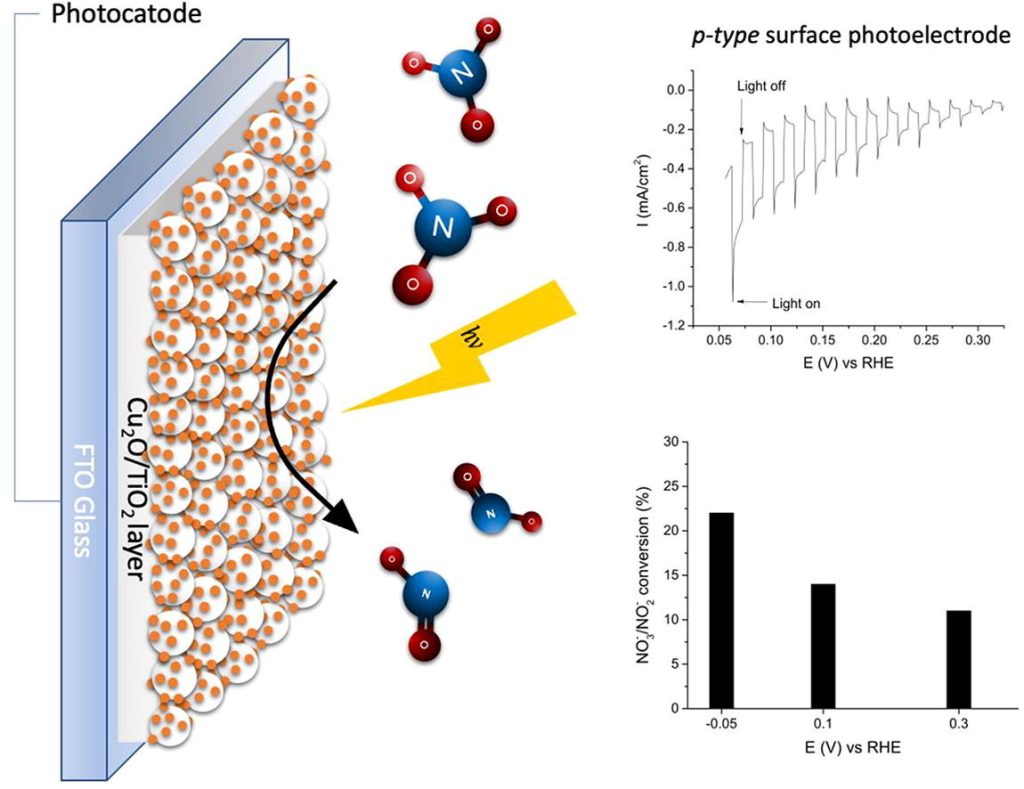
Easy and low-cost synthesis of a Cu2O/TiO2/FTO electrode is proposed. The Cu2O/TiO2 heterojunction was synthesized by sintering TiO2 nanoparticles on an FTO electrode surface, followed by a Cu2O electrochemical deposition step. Characterization of the electrode was performed by FE-SEM-EDX microscopy, Raman and UV–Vis DR spectroscopy, and electrochemical methods. The photoelectrochemical behavior was characterized, and the p-type character material was confirmed. The reduction of nitrate to nitrite was performed using the Cu2O/TiO2/FTO electrode under Xe lamp illumination with lower overpotentials than those commonly used in this electrochemical process. Nitrate/nitrite conversion was achieved with a promising result of about 22% conversion at −0.05 V RHE.
2017 – IOP Conference Series: Materials Science and Engineering
Effect of surface etching and electrodeposition of copper on nitinol
E Ramos-Moore, A Rosenkranz, L F Matamala, A Videla, A Durán and J Ramos-Grez*
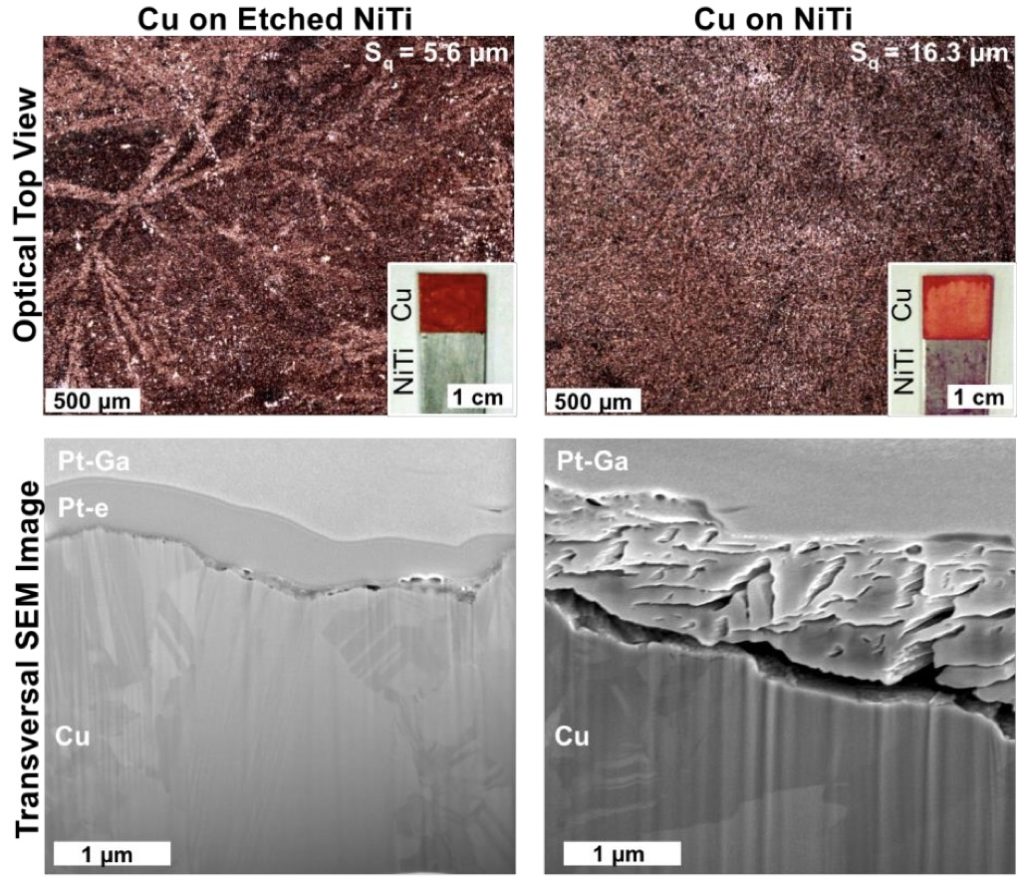
Nitinol-based materials are very promising for medical and dental applications since those materials can combine shape memory, corrosion resistance, biocompatibility and antibacterial properties. In particular, surface modifications and coating deposition can be used to tailor and to unify those properties. We report preliminary results on the study of the effect of surface etching and electrodeposition of Copper on Nitinol using optical, chemical and thermal techniques. The results show that surface etching enhances the surface roughness of Nitinol, induces the formation of Copper-based compounds at the Nitinol-Copper interface, reduces the austenitic-martensitic transformations enthalpies and reduces the Copper coating roughness. Further studies are needed in order to highlight the influence of the electrodeposited Copper on the memory shape properties of NiTi.
2017 – Minerals Engineering
Ferrous Ion oxidation monitoring by using magnetic resonance imaging for bio-oxidation laboratory testing
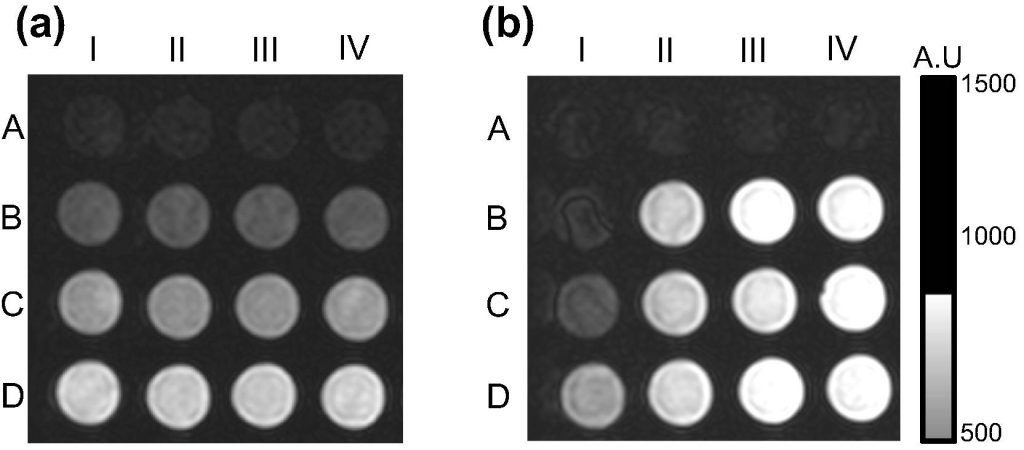
A non-invasive, non-destructive monitoring approach using three-dimensional (3D) Magnetic Resonance Imaging (MRI) is proposed to study the iron oxidation process driven by Ferrooxidans’ bacterial activity. This activity is related to the oxidation of Fe2+into Fe3+. Fe3+ ion has paramagnetic properties that could be used to visualize its presence using MRI. A novel MRI methodology has been implemented to visualize Fe3+ in solution with the aim to be used as a marker of iron oxidizer bacteria activity. A proof of concept test has been performed with bacteria in solution and in two solids media: an inert vegetal material (luffa) and solid particles, both dipped in acid solutions. The samples were scanned using a clinical 1.5 T MRI scan at several time points to test the capabilities of detecting different Fe3+ concentrations in the solution in time, while Ferrous Ion oxidation is driven by Ferrroxidans. The measurements were contrasted with titration methods to account for Ferrous Ion consumption during the process. The result reveals that a characteristic parameter obtained with MRI imaging, known as R1relaxivity time measured in Hertz, correlates with Fe2+ oxidation (increment in Fe3+concentration). 3D images of the distribution of Fe3+ production in the samples were acquired. Results are promising and open opportunities to continue complementary laboratory research at the network porous level to capture the spatial 3D distribution of Ferric Ions as distributed inside the porous network during a bio-reaction test